Her roasted butternut-carrot soup is the perfect post-Thanksgiving feast dish, as it features high-fiber ingredients like kale, butternut squash, and sunflower seeds. Fiber is critical for healthy gut bacteria, and incorporating enough in your diet could protect against inflammation and leaky gut (it also helps get things moving digestively after the big day, which feels amazing!). Kale is packed with detoxifying and anti-inflammatory propertiesand aids in digestion as well.
Hansen's butternut-carrot soup also has a major skin-healing ingredient—carrots. They are high in vitamin C, which helps produce collagen and reduce wrinkles, as well as beta-carotene, an antioxidant that improves cell regeneration.
So whether you feel like your body needs a big detox after Thanksgiving or just a little pick-me-up, this soup will help you get there!
Roasted Butternut-Carrot Soup
Makes 2 servings
Ingredients
¼ butternut squash, with skin and seeds removed, diced
2 carrots, chopped
½ cup canned full-fat coconut milk
¼ cup vegetable broth
Pinch of sea salt
2 cups shredded kale
1 teaspoon olive oil
Pinch of ground black pepper
½ handful of fresh parsley leaves, for garnish
2 tablespoons sunflower seeds
Method
1. Preheat the oven to 400°F/200°C. Line a baking sheet with parchment paper.
2. Spread the squash and carrots on the baking sheet, and bake for 45 minutes.
3. Blend the squash, carrots, coconut milk, broth, and salt in a blender or using an immersion blender until smooth.
4. Transfer the soup to a pot, set over medium heat, and cook for 3 minutes. Add the kale, and cook for an additional 2 minutes.
5. Serve drizzled with the olive oil and sprinkled with the pepper, parsley, and sunflower seeds.
PROTEIN APPLE CRISP WITH ICE CREAM Ingredients
— 1 large apple
— 2 scoop LeanOut Protein (corecamper.com/store)
— 2 tsp. cinnamon
— 4 packs of Stevia
— Small splash Vanilla extract
— ½ tsp No Calorie butter spray
— ¼ cup oats
— 1 tbsp egg whites
Preparation
Preheat oven to 350°F.
1. Add all together and bake for about 10-15 minutes at 350 degrees.
2. Serve with high protein Ice Cream
PROTEIN PUMPKIN CHOCOLATE CHIP MUFFINS
Ingredients
— 1 cup old fashioned oats
— 1 cup pumpkin puree
— 1 cup Greek yogurt
— 1/2 cup egg whites
— 2 scoops vanilla bean cupcake LeanOut Protein(corecamper.com/store)
— 1 1/2 teaspoon pumpkin pie spice
— 1 teaspoon cinnamon
— 1 teaspoon baking powder
— 1/2 teaspoon baking soda
— 1/2 cup dark chocolate chips
Instructions
1. Preheat oven to 350 degrees Fahrenheit.
2. Add the oats to a blender and process until a flour forms (about 10 seconds).
3. Add the pumpkin, Greek yogurt, eggs, protein powder, pumpkin pie spice, cinnamon, baking powder, and baking soda and blend again until well combined.
4. Stir in the chocolate chips.
5. Distribute into greased muffin tins
6. Bake for 20 minutes or until a toothpick comes out clean.
APPLE PIE OATMEAL BREAKFAST COOKIES
— 1 cup quick oats
— ¾ cup whole wheat flour
— 1 ½ tsp baking powder
— 1 ½ tsp ground cinnamon
— ¼ tsp ground nutmeg
— ¼ tsp salt
— 1 ½ tbsp unsalted butter or coconut oil, melted and cooled slightly
— 1 large egg white
— 1 tsp vanilla extract
— ¼ cup maple syrup
— 5 tbsp nonfat milk
— ¾ cup finely diced red apple
Instructions
1. In a medium bowl, whisk together the oats, flour, baking powder, cinnamon, nutmeg, and salt. In a separate bowl, whisk together the butter or coconut oil, egg white, and vanilla. Stir in the maple syrup and milk. Add in the flour mixture, stirring just until incorporated. Fold in the apple. Chill the cookie dough for 30 minutes.
2. Preheat the oven to 325°F, and line a baking sheet with a silicone baking mat or parchment paper.
3. Using a spoon and spatula, drop the cookie dough into 15 rounded scoops onto the prepared sheet, and flatten to the desired thickness and width using a spatula. Bake at 325°F for 9-11 minutes. Cool on the pan for 10 minutes before turning out onto a wire rack.
Many people wonder why they’re not losing weight when they follow a strict diet and exercise routine.
One possible reason is that what look like healthy options aren’t what they seem. Many foods and drinks contain hidden fats, sugars or salt, each of which will curb your weight loss efforts. In addition to the kilojoules, these flavoursome foods leave you wanting more.
Losing weight is largely about tipping the balance of kilojoules in and out. If you’re trying to lose weight or simply seeking a healthier lifestyle, here are five common traps that might be hindering you.
1. All salads are good for you
Vegetables are good for you, absolutely. But salads often include other ingredients, which will hike up your kilojoule (kJ) count.
A Caesar salad looks green and leafy but is filled with hidden fats from the bacon (8g* fat; 360kJ), parmesan cheese (6g fat; 340kJ) and creamy salad dressing lathered over the top (20g fat; 770kJ). Even the croutons are fried for added crunch. So a Caesar salad gives you 70%* of your total daily fat intake for an average adult in one meal.
On par with this is a creamy pasta salad, often seen at family barbecues. A side serve of this comes in at almost 920 kilojoules.
Fats provide the highest kilojoules from food (followed closely by alcohol, but more on that later). So be wary of dressings, sauces, gravies and high fat foods that may be adding kilojoules to your meal.
2. I don’t eat junk food, just ‘healthy’ snacks
Australians consume more than 30% of their kilojoules from discretionary or “junk” foods, such as biscuits, chips and chocolate. None of these are providing us with any vital nutrients. These are the kilojoules we need to shift to lose weight.
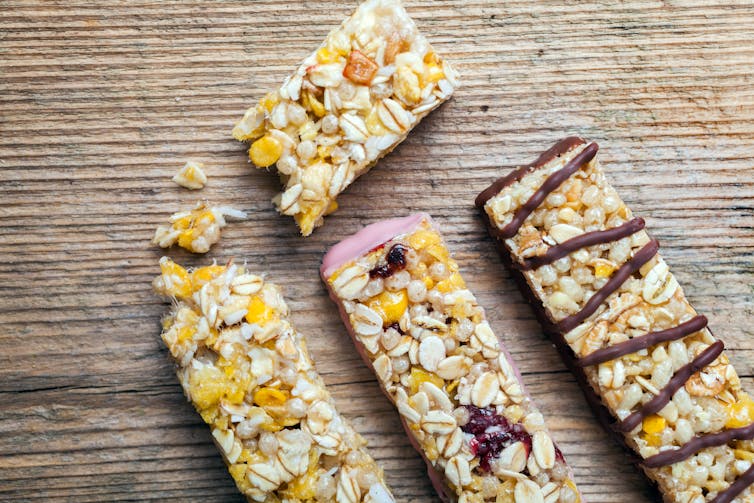
But many people make the mistake of swapping junk food for seemingly “healthy snacks”, such as muesli bars and protein balls. While these can claim to be healthy and organic, they’re often processed and high in kilojoules.
While muesli bars are made up of healthy elements, it’s usually sugar holding them together.From shutterstock.com
Muesli bars do contain healthy ingredients such as oats, nuts and seeds. But sticking all the parts together to form a bar is usually achieved with a form of sugar. A yoghurt, fruit and nut bar can contain up to 4.6 teaspoons of sugar.
Next time you feel like a snack, why not substitute your muesli bar with a handful of nuts and seeds. This will provide you with useful vitamins and minerals – minus the sugar sticking them together.
There’s recently been a shift towards more natural forms of added sugar, but they contain no additional nutrients and no fewer kilojoules. Adding honey or agave syrup to your dish does not differ nutritionally from adding sugar to the same dish. It may taste different, but you’re still adding sugar.
Next time you feel like something sweet, try adding some fruit instead. It has a natural sweetness and will give you extra vitamins and minerals.
If you find your downfall is adding sugar to coffee, try using soy milk instead of cow’s milk. It has a sweeter taste (but one that may need some getting used to in the first instance).
Or try reducing the amount of sugar you add by half a teaspoon each week. You’ll find you barely notice the difference after a while.
Think of the humble banana, mashed up into banana bread. This is not a bread at all, but a cake. If you’ve ever made banana bread you’ll realise just how much butter and extra sugar gets added to something nature has already made to be sweet and in its own convenient package.
Meanwhile, fruit drinks generally contain only 25% fruit juice and are very high in sugar. But even when drinking 100% fruit juice, you’re missing out on the important fibre that comes naturally from fruit and helps your body recognise it feels full. So whole fruit is best.
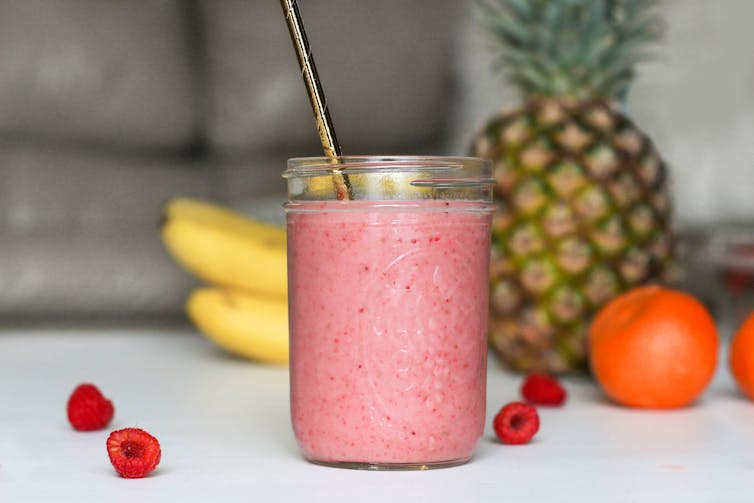
Fruit smoothies, although slightly better than fruit juices, are another one you can easily be caught out on. Smoothies are generally prepared in large servings and may have syrups or ice creams added to them, reducing their nutritional value by comparison.
Smoothies may have unhealthy ingredients added, while juices lose the good bits found in whole fruit.Element5 Digital/Unsplash
5. Drinks can’t have too many kilojoules… right?
If you’re trying to lose weight, you’ll know sugary soft drinks are a no-go. But some of the easiest mistakes to make are those in liquid form.
Many people aren’t aware how many kilojoules are in alcoholic drinks. An average restaurant serving of red wine is equivalent to 1.5 standard drinks and contains 480 kilojoules.
So after two glasses of wine, not only have you exceeded the recommended two standard drinks, but you’ve also consumed the equivalent kilojoules to eating two full cups of corn chips. The same applies for beer, where just one schooner equates to 1.6 standard drinks which is the same as 615 kilojoules.
Probably the most common food mistake when trying to lose weight is eating too much. We need to choose the right foods but the amount is also important.
We need to listen to the signals our bodies send when when we’re getting full to stop eating. The best way to do this is to eat slowly, chewing carefully. By slowing our eating we are more likely to be sent the sign of fullness before feeling it at our waistband.
Editor’s note: this article originally said the bacon in a Caesar salad had 40g of fat and the salad would be the equivalent of your total daily fat intake in one meal. This has now been corrected.